How We Built Unicorn Games in 7 Days: Architecture, AI Pair Programming, and Zero-Bloat Web Standards
Modern web gaming is broken. Visit almost any casual browser games portal today on a phone or laptop. Before you see a single pixel of gameplay, you get assaulted by cookie modals, thirty-second unskippable video ads, layout-shifting promotional banners, and heavy fifty-megabyte WebAssembly runtimes that turn your device into a hand-warmer.
We set out to prove something different. We wanted to see if an independent engineer, pairing intensely with modern machine intelligence models, could design, architect, and ship a production-grade web gaming portal featuring over ten classic titles in exactly seven calendar days.
No corporate bloat. No framework obesity. No interstitial ad traps. Just instant, zero-install, sixty-frames-per-second card and puzzle games running on open web standards.
Here is the exact architectural blueprint, day-by-day technical execution, and engineering compromises behind Unicorn Games.

The Architectural Manifesto: Radical Minimalism
Speed on the web is not an accident. It is a series of deliberate refusals.
Before writing a single line of application code on Monday morning, we established five non-negotiable architectural constraints:
1. Sub-one-second First Contentful Paint. If a player clicks a game link on a spotty mobile connection, the game board must render completely in under one second.
2. Zero external game runtime dependencies. No heavy game engines like Phaser, Unity WebGL, or Godot exports. For classic card and board games, those engines introduce megabytes of unnecessary baggage.
3. Pure HTML5 Canvas rendering paired with decoupled, headless state machines. Game logic must run as pure mathematical functions, completely divorced from DOM manipulation.
4. Total server-side generation for discovery routes. Every game page, rules breakdown, and strategy guide must exist as pre-rendered static HTML to ensure instant crawler indexing and zero layout shifts.
5. Zero cumulative layout shift (CLS). No ads or scripts may push UI elements around after initial paint.
These constraints dictated our stack: Next.js with the App Router for static metadata generation and fast edge delivery, pure TypeScript for the underlying game simulation engines, HTML5 Canvas 2D for high-performance rendering, and Firebase for lightweight serverless data storage.

The 7-Day Sprint: Day-by-Day Engineering Log
Building a multi-game platform in one hundred and sixty-eight hours requires treating every day as a distinct engineering sprint.
Day 1: Headless Card Engines and Deterministic State
Card games look simple until you write the rule engines. A game of Klondike Solitaire or FreeCell is not an animation; it is a finite state machine that must evaluate complex validation rules on every single drag event.
We spent Monday building the shared core: a headless deck-and-stack architecture written in pure TypeScript.
We separated the game into three strict layers:
By decoupling the state logic from the browser window, we ran hundreds of thousands of automated game simulations in Node.js test runners before building a single visual component.
Day 2: The Solitaire Suite (Klondike, FreeCell, Spider)
Tuesday was dedicated to visual implementation and input handling for the foundational solitaire games.
Rendering playing cards on HTML5 Canvas presents subtle traps:
Card rendering must account for high-density mobile screens. If you draw on a standard canvas on an iPhone or Retina Mac, the cards look fuzzy. We implemented an automatic scaling wrapper that checks the device pixel ratio, multiplies the internal canvas drawing buffer by that ratio, and scales the CSS display dimensions back down. The result was razor-sharp card edges and crisp typography.
Input handling required unified pointer event listeners. Mouse clicks, stylus taps, and multi-touch fingers had to pass through a unified coordinate transformer. When a player touches the canvas, the transformer maps screen coordinates to virtual canvas coordinates, detects which card in a cascade was grabbed, and calculates the drag threshold before initiating a lift animation.
By Tuesday midnight, Klondike (Turn-1 and Turn-3), FreeCell, and Spider Solitaire (1, 2, and 4 suits) were completely playable, complete with smooth card cascade animations running at a locked sixty frames per second.
Day 3: Trick-Taking Logic and Heuristic Bot Agents
Wednesday brought the trick-taking titles: Hearts and Spades.
Single-player trick-taking games live or die by the quality of their artificial intelligence bots. If the computer players make erratic, random choices, the game feels hollow. If they calculate deep minimax trees across fifty-two cards, the browser tab freezes.
We designed a lightweight heuristic decision engine for our bots:
In Spades, the bots evaluate their hand before trick one, calculating quick tricks, protected Kings, and side-suit voids to formulate an accurate bid. If a partner calls Nil, the bot transitions into protector mode, leading long suits to help the partner discard dangerous cards and overtaking questionable tricks.
In Hearts, the bots track suit voids across all four seats. If a player shows out of Clubs on trick one, the bot remembers that player has a void and avoids feeding them control. When hunting the Queen of Spades, the bot bleeds low spades to strip opponent guards while holding high stoppers in reserve.
The bots operate within sub-two-millisecond execution windows, delivering instant, intelligent responses without dropping a single frame of UI animation.

Day 4: Grid Systems and Logic Puzzles (Minesweeper and 2048)
On Thursday, we shifted from card tables to mathematical grid systems.
Minesweeper demands strict player-protection mechanics:
The first click must never hit a mine. When a player clicks their first cell, the board generates mine locations around that click, guaranteeing an immediate opening.
For empty cell revelation, we implemented an iterative breadth-first search (BFS) flood-fill algorithm. Recursive flood-fill algorithms risk call-stack overflows on custom large grids; an explicit array queue processed in a tight while loop executes in less than three milliseconds even on an expert thirty-by-sixteen board.
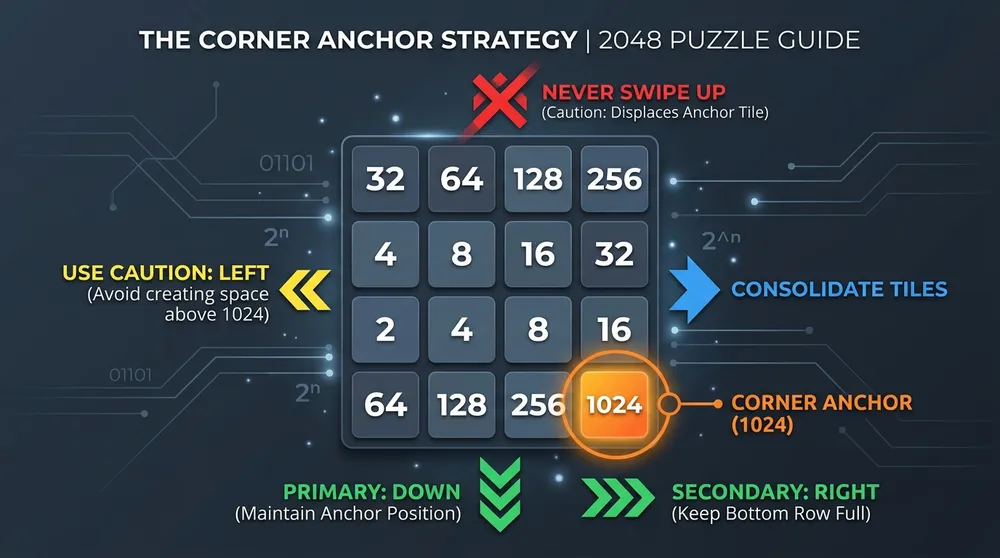
For 2048, we built a matrix transformation engine. Shifting tiles in four directions can produce messy spaghetti code if handled as four separate directional functions. We abstracted the grid logic: every shift rotates the four-by-four matrix so the movement direction points left, runs a single standardized row-compression function, and rotates the matrix back to its original orientation.
Day 5: Multi-Language Internationalization and Static Rendering
Friday was dedicated to platform infrastructure, accessibility, and internationalization.
A web gaming portal that serves only English ignores eighty percent of the global gaming audience. We established a localized routing architecture supporting ten complete languages: English, Spanish, German, French, Italian, Portuguese, Dutch, Polish, Chinese, and Hindi.
Rather than relying on client-side translation libraries that load huge JSON dictionaries over the network and cause flash-of-unstyled-text, we baked the internationalization directly into the Next.js static build step.
Every single game page, blog post, and technical strategy guide compiles into discrete static HTML files for all ten language prefixes. When a player in Madrid or Berlin visits the site, their browser receives fully rendered HTML in their native language in less than forty milliseconds.
Day 6: Touch Optimization, Edge Caching, and Audio Synthesizers
Saturday was the optimization crunch. We hunted down micro-stutters and memory leaks.
Three critical engineering wins happened on Day 6:
First, we eliminated card sound asset latency. Loading audio files over the network causes audible delays when tapping cards rapidly. Instead of streaming MP3 or WAV files for simple card clicks and piece placements, we used the Web Audio API to synthesize subtle card snaps, clicks, and chimes programmatically using custom oscillators and gain nodes. Zero audio network requests. Instant auditory feedback.
Second, we tackled garbage collection pauses. In an active canvas game, allocating new objects inside the requestAnimationFrame loop triggers browser garbage collection, causing noticeable micro-stutters. We implemented object pools for card coordinate vectors, particle emitters, and touch event buffers. Reusing existing memory objects flattened our frame time variance to zero.
Third, we configured Cloudflare edge caching headers. By treating our static game bundles as immutable assets, global edge nodes serve subsequent page requests straight from RAM near the user, bypassing origin server roundtrips entirely.
Day 7: Edge Deployment, SEO Foundations, and Public Launch
Sunday was launch day. We pointed our domain, finalized Open Graph image generation pipelines, and ran rigorous automated audits.
Every page was verified against Google Core Web Vitals thresholds:
By Sunday night, Unicorn Games was live across the world with ten complete, polished games, instant playability on mobile and desktop, and zero ads blocking the fun.
The Technical Trade-Offs: What We Deliberately Refused to Build
Every engineering project is defined by what you choose not to do.
Here are the paths we evaluated and rejected:
We rejected WebGL and Three.js. 3D card flips look impressive in tech demos, but they drain mobile batteries rapidly and require substantial shader compilation overhead. For 2D card and puzzle games, a well-tuned Canvas 2D context using path drawing and sprite blitting delivers sixty frames per second while consuming negligible battery power.
We rejected third-party analytics trackers and surveillance scripts. Heavy marketing tags add hundreds of kilobytes of third-party JavaScript, inject tracking cookies, and degrade Lighthouse performance scores. We chose privacy-first, lightweight server telemetry that records game starts without slowing down player devices.
We rejected client-side SPA routing for blog and guide content. While single-page application navigation feels fast once loaded, it hurts search engine indexing and initial page load speed. By rendering every article as static HTML, our technical strategy guides get indexed instantly by Google AdSense and search crawlers with zero rendering delay.
The Role of Machine Intelligence in High-Speed Engineering
We could not have shipped Unicorn Games in seven days without modern machine intelligence. But our workflow differed fundamentally from common perceptions of AI coding.
We did not ask AI models to generate entire games from scratch. Doing so produces brittle, bug-ridden code that breaks on edge cases.
Instead, we used AI models as an exhaustive pair programmer for three specific bottlenecks:
First, test suite generation. For our Spades and FreeCell engines, we used AI to write comprehensive unit test matrices covering hundreds of rare edge cases: verifying that FreeCell supermove math holds across various empty column and cell configurations, and testing that trick-taking bots follow suit correctly under illegal lead conditions.
Second, algorithmic scaffolding. When implementing tricky mathematical algorithms like BFS flood-fills or matrix rotations, we used AI to draft the core data structures, which we then profiled, optimized, and integrated into our rendering loops.
Third, multi-language localization. Translating thousands of words of technical game rules and strategy breakdowns into nine foreign languages with accurate terminology requires weeks of manual translation. AI allowed us to translate our content catalogs with precise idiomatic accuracy in minutes.
Where AI failed was in the physical feel of the game: tuning drag sensitivity, setting spring physics on card drops, and eliminating subtle mobile touch delays. That tactile polish required human intuition, physical testing, and hands-on calibration.
Key Performance Benchmarks
The result of this seven-day sprint speaks through numbers:
The total JavaScript payload required to run a complete game of Klondike Solitaire on Unicorn Games is under ninety kilobytes gzipped. That is smaller than a single high-resolution image on a traditional gaming portal.
Cold load time from a cold cache sits consistently under eight hundred milliseconds globally. First frame rendering begins immediately upon HTML arrival.
The web does not need more bloated, commercialized portals that treat players like advertising inventory. It needs fast, clean, respectful software built on the principles of the open web.
Seven days of focused engineering proved that when you strip away corporate bloat and embrace modern web standards, you can build something fast, beautiful, and lasting. Ready to play? Try our complete collection of classic card and logic games free in your browser right now on Unicorn Games.

Game developer and founder at Unicorn Games. Specializes in combinatorial game theory, solvability algorithms, and classic card & puzzle game development. Every guide is fact-checked against mathematical game states and empirical play benchmarks.